I watched a bone-stock JL Wrangler with street tires somehow dance through Cadillac Hill without a scratch, then get absolutely destroyed at The Sluice two miles later. The driver walked away from his first Rubicon run with a crumpled rear quarter panel, a bent spare tire carrier, and a hard lesson about how these two obstacles punish completely different sins. Cadillac Hill and The Sluice represent the Rubicon Trail’s most notorious rig-eating sections, but they destroy vehicles in fundamentally opposite ways.
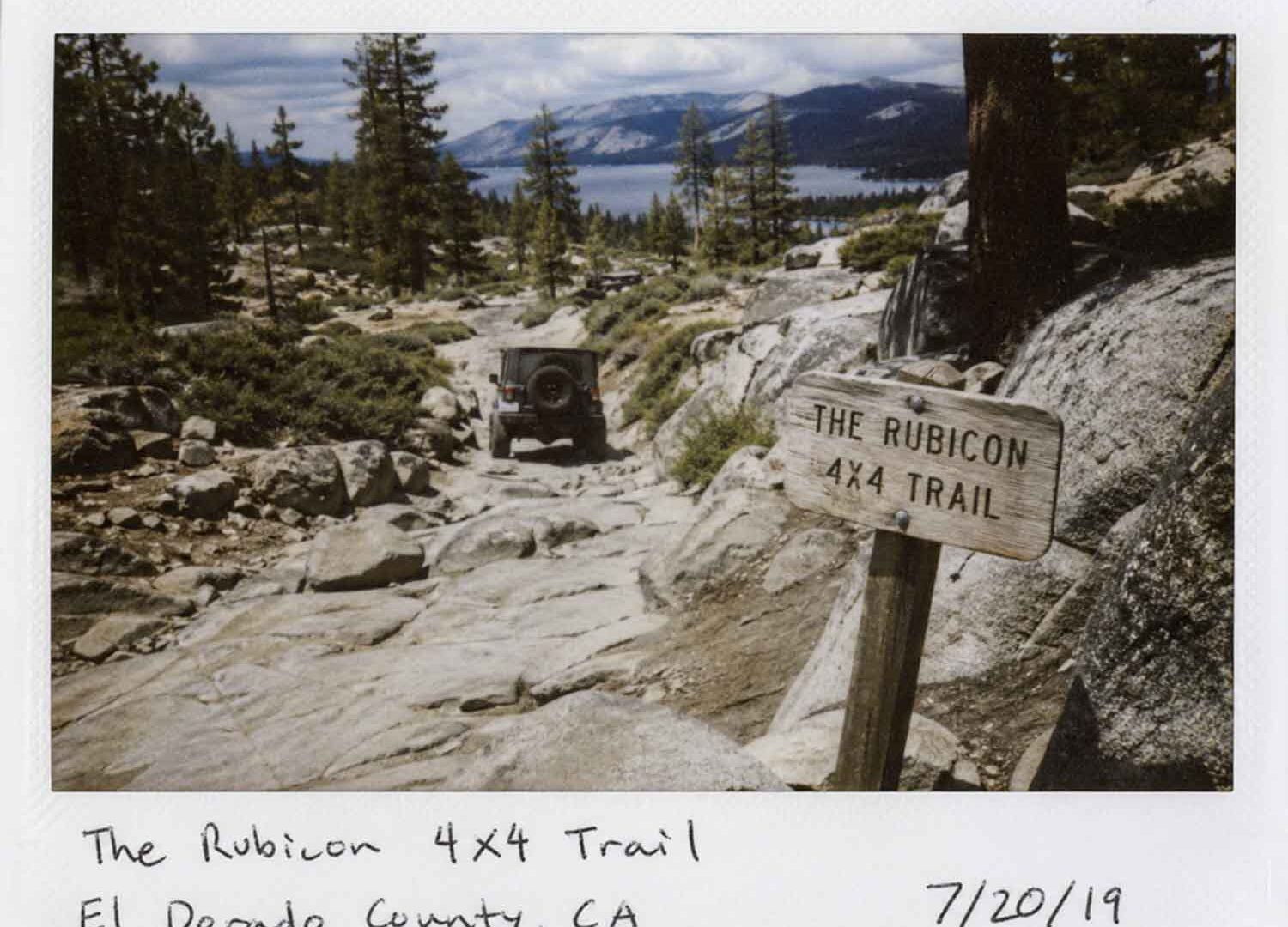
The Rubicon Trail runs 22 miles from Georgetown to Lake Tahoe, California, and both Cadillac Hill and The Sluice sit in the trail’s technical middle section between Loon Lake and Buck Island Lake. These obstacles have claimed more driveshafts, body panels, and egos than any other features on America’s most famous 4×4 trail. Understanding their differences means the difference between driving out under your own power or calling for a tow.
Cadillac Hill: Where Driveshafts Go to Die
Cadillac Hill earned its name from a massive Cadillac-sized boulder that sits at the obstacle’s crux, forcing drivers into an off-camber climb with limited line choices. The main route requires threading a narrow gap between granite slabs while maintaining momentum up a 45-degree incline. The right line demands precise wheel placement on a basketball-sized ledge with your passenger-side tires, while the left side drops into a wheel-eating crevice.
This obstacle kills driveshafts through articulation overload. When drivers take the standard line, the rear axle drops into the left-side gap while the front climbs the granite ledge, creating extreme suspension extension. CV joints bind, U-joints scream, and something eventually snaps. I’ve watched more rear driveshafts explode here than anywhere else on the trail. The failure point typically happens when drivers gun the throttle after getting hung up, loading the driveline with maximum torque while components are already stressed to their limits.
Smart drivers use the bypass line on the far right, which trades mechanical stress for body damage risk. This route requires climbing over exposed granite with minimal ground clearance, making it the better choice for rigs with upgraded driveline components but stock body protection. The bypass demands 33-inch tires minimum and aggressive approach angles – think Jeep JK on 4-inch lift rather than stock anything.
The Sluice: Body Panel Graveyard
The Sluice sits roughly two miles past Cadillac Hill and attacks vehicles from completely different angles. This obstacle funnels traffic through a narrow granite channel with vertical walls on both sides, creating unavoidable contact points. The standard line requires sliding your passenger side against the right wall while keeping your driver side clear of the left wall’s protruding shelves. There’s no bypass, no alternate route, and no way through without intimate contact with Sierra granite.
Body damage happens here through simple geometry. The channel measures roughly 84 inches wide at its narrowest point, while a stock Ford Bronco measures 79.3 inches without mirrors. Add oversized tires, aftermarket fender flares, or rock sliders, and something’s getting scraped. I’ve seen pristine paint jobs destroyed in seconds as drivers miscalculate their line or panic-steer into the walls.
The Sluice rewards preparation over horsepower. Spotters become critical for guiding drivers through the tightest sections, and trimmed fender flares make more difference than engine modifications. Long-wheelbase vehicles like crew-cab pickups face additional challenges with breakover angles, often requiring careful throttle modulation to prevent high-centering on the channel’s granite floor.
Why Each Obstacle Targets Different Weaknesses
Cadillac Hill tests mechanical limits while The Sluice tests dimensional limits. A built Toyota Tacoma with aftermarket driveshafts, chromoly axles, and upgraded differentials can power through Cadillac Hill’s articulation demands but still get shredded at The Sluice if it’s running wide fender flares. Conversely, a narrow-bodied Jeep CJ with trimmed fenders might slip through The Sluice untouched but snap a factory rear driveshaft on Cadillac Hill’s demanding climb.
Trail veterans often prepare differently for each obstacle. Before Cadillac Hill, smart drivers check driveline U-joints, air down to 12-15 PSI for maximum traction, and mentally prepare backup plans if components fail. Before The Sluice, the focus shifts to body protection – installing temporary padding on vulnerable panels, removing mirrors, and walking the line multiple times to identify contact points.
Both obstacles demand different spotter techniques. Cadillac Hill spotters focus on wheel placement and momentum management, calling out precise tire positioning on granite ledges. Sluice spotters become human measuring tapes, guiding drivers through clearance calculations and warning about protruding rock features that threaten body panels.
Q: Which obstacle is harder for a stock Jeep Wrangler?
Cadillac Hill poses greater risk for stock Wranglers because factory driveline components typically fail before body panels get seriously damaged, and driveline failures leave you stranded while body damage is usually cosmetic.
Q: Can you avoid both obstacles on the Rubicon Trail?
The Sluice has no bypass and must be negotiated by all vehicles, while Cadillac Hill offers a bypass route on the far right that trades mechanical stress for increased body damage risk.
Q: What’s the minimum tire size for these obstacles?
Cadillac Hill requires 33-inch tires minimum for the bypass route, while the main line can be completed with stock tires and skilled driving, though The Sluice can be navigated with any tire size since it’s primarily about vehicle width rather than ground clearance.
Q: How long does it take to get through each obstacle?
Cadillac Hill typically takes 15-20 minutes per vehicle including spotting time, while The Sluice moves faster at 5-10 minutes per vehicle since there’s only one viable line to navigate.
Q: What’s the most common damage at each obstacle?
Cadillac Hill most commonly destroys rear driveshafts and CV joints through over-articulation, while The Sluice primarily damages door panels, fender flares, and side mirrors through contact with granite walls.
Q: Which obstacle has caused more trail closures?
Cadillac Hill causes more significant trail delays because mechanical failures often require winch recoveries or parts replacement, while Sluice damage is usually cosmetic and allows vehicles to continue driving.
Have a dirty day.