The ranger at Joshua Tree’s entrance station delivered the news with practiced indifference: “Campgrounds are full through March. Try the reservation system.” Meanwhile, fifty miles north in Alabama Hills, my buddy Jake was sending photos of his camp setup among granite boulders—no reservations, no fees, no crowds choking the access roads.
Alabama Hills and Joshua Tree National Park sit within 50 miles of each other along California’s Eastern Sierra, but they deliver vastly different experiences for overlanders. Alabama Hills is a Bureau of Land Management recreation area offering unlimited dispersed camping among dramatic granite formations. Joshua Tree is a national park with restricted camping, advance reservations, and regulated access. The choice between them comes down to logistics, solitude preferences, and what you actually want from your desert time.
Camping Access: Bureaucracy vs. Freedom
Joshua Tree requires advance reservations for all campgrounds from October through May—peak desert season. The reservation system opens five months ahead, and popular sites like Jumbo Rocks fill within hours. Cottonwood Campground offers the best access for larger rigs, but sites accommodate a maximum of 32 feet. Indian Cove allows the biggest setups at 35 feet, but you’ll pay $25 per night plus reservation fees.
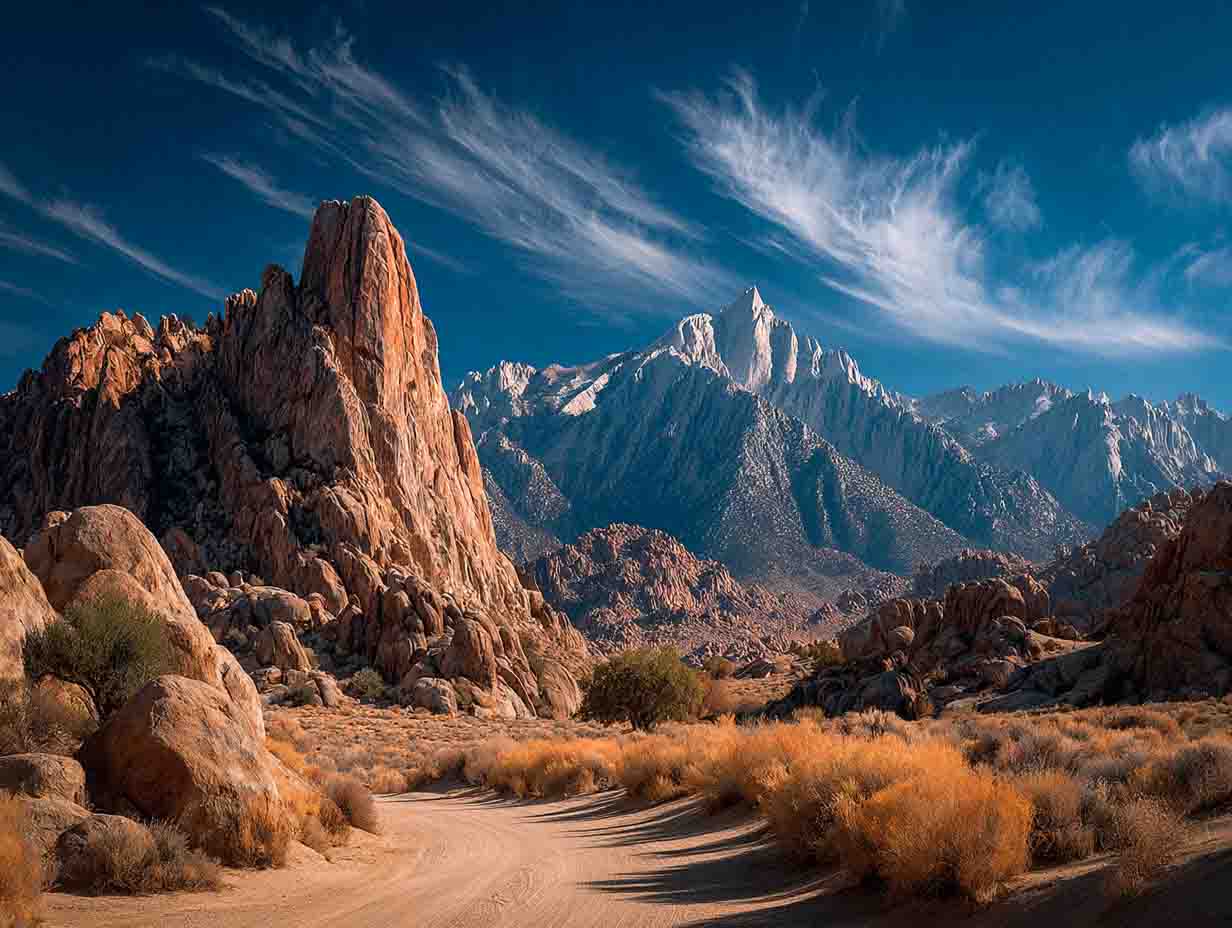
Alabama Hills operates under BLM’s 14-day dispersed camping rules with no reservations required. You can camp anywhere outside the designated day-use areas for free. Movie Flat Road and Tuttle Creek Road provide the main access corridors, with hundreds of established sites scattered among the granite formations. The area accommodates any size rig—I’ve seen 40-foot motorhomes tucked between boulders alongside built Toyota 4Runners.
Weather windows matter in both locations. Alabama Hills sits at 4,000 feet elevation and can see snow from December through February, while Joshua Tree’s lower desert sections stay accessible year-round. But Alabama Hills’ Lone Pine proximity means real services—Grocery Outlet, hardware stores, and diesel—versus Joshua Tree’s limited options in Twentynine Palms.
Scenery and Activities: Hollywood Granite vs. Alien Joshua Trees
Alabama Hills earned its reputation as Hollywood’s go-to Western backdrop for good reason. The rounded granite formations create natural amphitheaters and arches, with the jagged Sierra Nevada peaks providing a dramatic backdrop. Mount Whitney dominates the western skyline at 14,505 feet—the highest peak in the contiguous United States. The contrast between foreground boulders and alpine peaks creates compositions that Joshua Tree simply cannot match.
Joshua Tree delivers its namesake trees in forests that feel genuinely alien, especially in the transition zone between Mojave and Sonoran deserts. The Wonderland of Rocks area offers world-class bouldering and rock climbing. Skull Rock and Arch Rock provide Instagram-worthy stops, but expect crowds at popular formations during peak season.
For overlanders seeking driving challenges, neither location offers serious technical terrain. Alabama Hills’ dirt roads stay accessible to stock vehicles, while Joshua Tree’s backcountry requires high-clearance 4WD for routes like Geology Tour Road’s rougher sections. Both areas serve better as base camps for day trips rather than technical driving destinations.
Real-World Logistics: Services and Escape Routes
Lone Pine provides full overlanding support within 15 minutes of Alabama Hills camps. Elevation 4,000 feet on Highway 395 stocks recovery gear and off-road parts. Alabama Hills Cafe serves solid breakfast burritos, and you can resupply at major grocery chains. Cell coverage runs strong throughout the area on Verizon and AT&T networks.
Joshua Tree’s service situation creates planning challenges. Twentynine Palms offers basic supplies, but serious gear needs require drives to Yucca Valley or Palm Desert. Cell coverage drops to spotty in the park’s interior, and emergency response times stretch longer than Alabama Hills’ proximity to Lone Pine’s resources.
Weather escape routes favor Alabama Hills significantly. Highway 395 stays open during most winter storms, while Joshua Tree’s isolation means longer drives to shelter during unexpected weather. Alabama Hills also provides quick access to the Eastern Sierra’s year-round attractions—Mammoth Lakes, Bishop, and the Alabama Hills themselves transition into different adventures based on season.
The choice comes down to priorities. Joshua Tree delivers better rock formations for climbing and photography, plus that distinctly Mojave Desert ecosystem. But Alabama Hills offers unrestricted camping, better logistics, more dramatic mountain scenery, and freedom from the national park reservation circus. For overlanders who value spontaneity and self-sufficiency over curated park experiences, Alabama Hills wins decisively.
Q: How far in advance do I need to book Joshua Tree camping?
A: Joshua Tree campground reservations open exactly five months ahead and popular sites like Jumbo Rocks fill within hours of opening, especially for weekends from October through April.
Q: What’s the RV size limit in Alabama Hills?
A: Alabama Hills has no official RV size restrictions for dispersed camping, and established sites accommodate rigs up to 40 feet, though maneuvering larger units between granite formations requires careful route planning.
Q: Which location offers better cell phone coverage?
A: Alabama Hills provides strong Verizon and AT&T coverage throughout the area due to Lone Pine’s proximity, while Joshua Tree’s interior sections have spotty or no coverage on all carriers.
Q: Can I drive my stock 4×4 in both locations?
A: Yes, both Alabama Hills and Joshua Tree’s main roads stay accessible to stock vehicles, though Joshua Tree’s Geology Tour Road and some backcountry routes require high-clearance 4WD for full access.
Q: What’s the best season for visiting each location?
A: Both locations peak from October through April, but Alabama Hills can see snow from December through February at 4,000 feet elevation, while Joshua Tree’s lower sections stay accessible year-round.
Q: Where can I get supplies and fuel near each location?
A: Alabama Hills sits 15 minutes from Lone Pine’s full services including Grocery Outlet, hardware stores, and multiple fuel stations, while Joshua Tree requires drives to Twentynine Palms for basic supplies or Yucca Valley for comprehensive resupply.
Have a dirty day.